NB. After reading this post, fairy folklore author Shaun Cooper pointed out to me that there are many instances in folklore of humans and fairies understanding each other in speech. Furthermore, not all fairies hate Christian symbols. With fairies, nothing one says about them exhausts the subject or applies in every situation. This post offers one perspective and is not meant to be a survey of folklore.
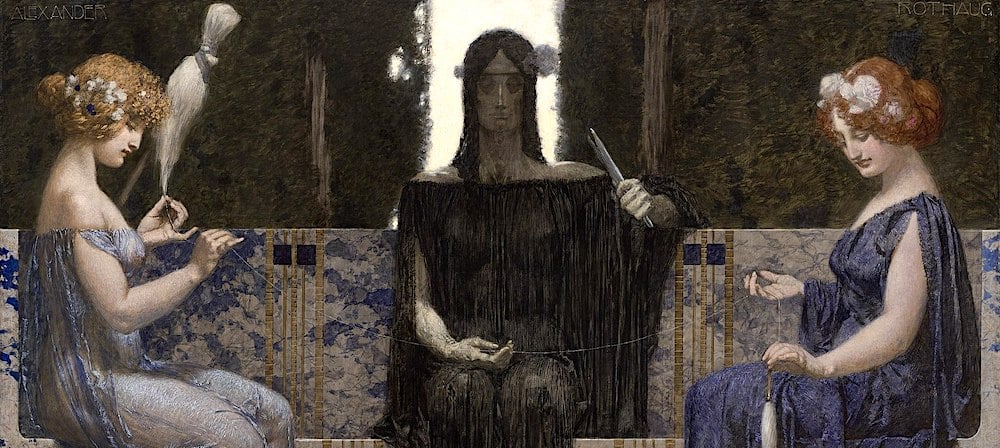
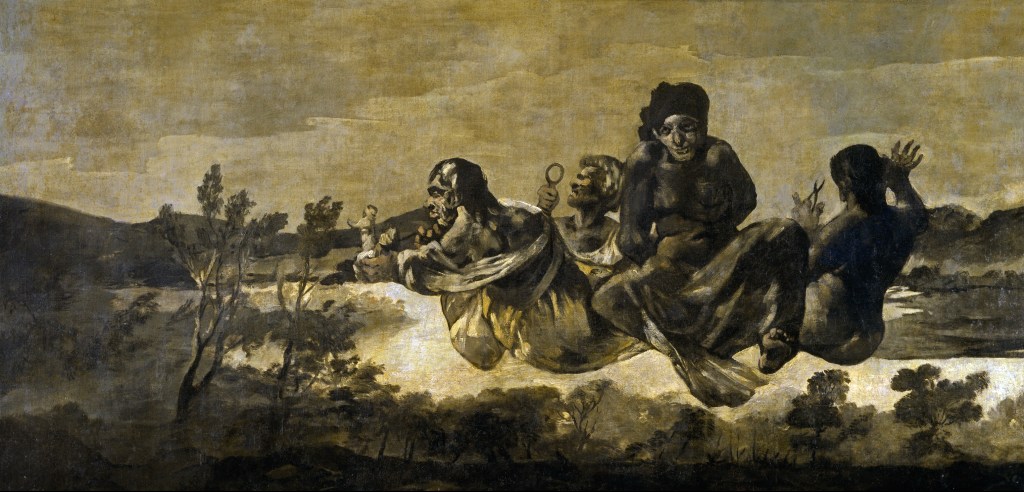
Until recently, I thought the etymology of the word fairy was quite uncomplicated: it originated in the French word la fée and ultimately went back to the Latin word Fata, referring to those goddesses, the Fates, who oversee human destinies.
However, I recently read in the excellent fairy folklore book, Twilight of the Godlings by Francis Young, that the word la fée may actually derive from the word fatua (which means fool or foolish) and ultimately goes back to the Latin word fari (to say). These words also relate to the words for Fate and the Fates in Latin.
If all these words derive from a word having to do with speech, the relationship between Fate and speech clearly has deep roots in the Latin language. The Fates speak our destinies—similar to the biblical prophets who reveal the future through speech.
Fatuous speech
So what kind of speech might we associate with fairies?
Certainly not an oracular speech tending toward secret intelligibility. As John Kruse pointed out in his blog, fairy speech in British folklore often manifests as a “jabbering talk,” composed of “odd noises,” “whistling,” or “humming.” In fact, for the purpose of this blog, I’m going to assume that the most important characteristic of fairy speech is actually this lack of intelligibility, especially when considered alongside other aspects of fairy existence. But what type of speech resists the meaning associated with language and exists solely in a dimension of sound?
Based on the relationship between la fée and fatua, we might conclude this speech is a foolish type of speech. In fact, we have the perfect word to describe it—the English fatuous, derived from Latin fatua/fatuus and referring to silly, inane speech.
What could be further from the omnipotent speech of the Fates than the fairies’ fatuous chatter?
Fairies in the Divine Plan
Based on my characterization of fairy speech, we can perhaps go further to suggest that, unlike the speech of the Fates and the prophets, which reveals a Divine Plan, fairy speech, to the extent that is is unintelligible, resists (or remains outside) this Plan.
The association of fairy speech with the physicality of sound (as opposed to the mental phenomenon of meaning) perhaps implies that fairies are the raw matter or friction that tends to escape the intelligibility of God’s Divine Plan. Just as the meaning of speech rests on manipulated sound, so the Divine Will expresses itself through matter, creating numerous opportunities for accidents and errors that have no significance in the larger scheme.
This relates to the most important characteristic of the Divine Plan: that it must always, finally, be ordered and understandable, even if this order and understanding exist most fully in the mind of God. Fairies, on the other hand, are rarely understood and are quite disordered: they fail to contribute to divine intelligibility and cannot be agents of God.
This view is consistent with the folkloric idea, drawn from Christian culture, that fairies are neither angels nor demons, neither saved nor damned, and that, therefore, they fall outside God’s Providence, as revealed to humans. Fairies, like their speech, do not conform to God’s designs, but nor do they sabotage them in a meaningful sense, as demonic powers might do.
The fairies and Fate
Nevertheless, the notion that the fairies’ fatuousness excludes them from Fate’s workings shouldn’t be pressed too hard. Who has ever managed to escape Fate’s encompassing embrace? Fairies certainly don’t have this kind of power (Francis Young calls them godlings, not gods, for good reason). So fairies, too, must exist within Fate’s sphere, even if, from the perspective of the Divine Plan, they remain unintelligible.
We tend to personify Fate in the form of beautiful or fearsome goddesses. This reflects our understanding of Fate’s significance. We rarely use the word fate to refer to trivial situations or minor misfortunes. Nevertheless, the relationship between the fairies and Fate suggests that perhaps even accident and triviality find their niche in the divine scheme.
One sees this in folklore when fairies are blamed for minor misfortunes and accidents—for example, spoiled milk or a balking horse. These events suggest fairies have power over trivial matters that Fate apparently overlooks. Does this mean fairies are divinities of chance and accident? Or perhaps the Fates’ younger siblings, their role being to act as impediments to the fortune that Fate dishes out, even while they remain folded, somehow, inside Fate’s Plan?
Accidents are not sinful, and fairies are not evil like the angels who fell because they rejected God’s Plan. They’re more like detritus falling by the wayside when Providence passes by. Could there even be a Divine Plan without the possibility of chance and accident? Or would there be nothing to work with, no material to shape into a Design? For where there’s milk, there tends to be curdling, and where there are horses, a degree of balking must exist.
Can one bless the fairies? An afterthought on queerness
I’ve written about fairies and queerness on this blog before, and I feel compelled to do so now because this week I was reminded again of the kinship existing between fairies and queers, especially in relation to God’s Divine Plan. For the world reacted with some surprise this week when the Vatican announced that priests are allowed to bless same-sex couples, those whose relationships the Declaration (Fiducia Supplicans) described as “not conformed to God’s will, as expressed in the teachings of the Church.”
(NB. The reason the Vatican believes same-sex couples can be blessed despite their relationships not “conforming to God’s plan” is that the blessings are pastoral and don’t require the people being blessed to conform fully to God’s designs.)
This got me thinking about whether the fairies, too, can be blessed. Like queer people, the fairies are nonconformists by nature. While not exactly rejecting God’s Plan, they represent accidents forever folded inside it. Similarly, queer desires are considered “free of sin” (when not acted on, according to the Vatican) but are nevertheless called “disordered,” almost as if God had made a mistake in creation. Fairies, also, are not evil, but they relate only accidentally to God’s plan and in this way are disordered. Based on the Vatican’s Fiducia Supplicans, it seems the fairies can indeed be blessed but never fully sanctified. This may explain their intolerance of Christian symbols.
Read about more fairies in my book New England Fairies: A History of the Little People of the Hills and Forests.
 Fairies of New England: The Little People of the Hills and Forests
Leave a comment