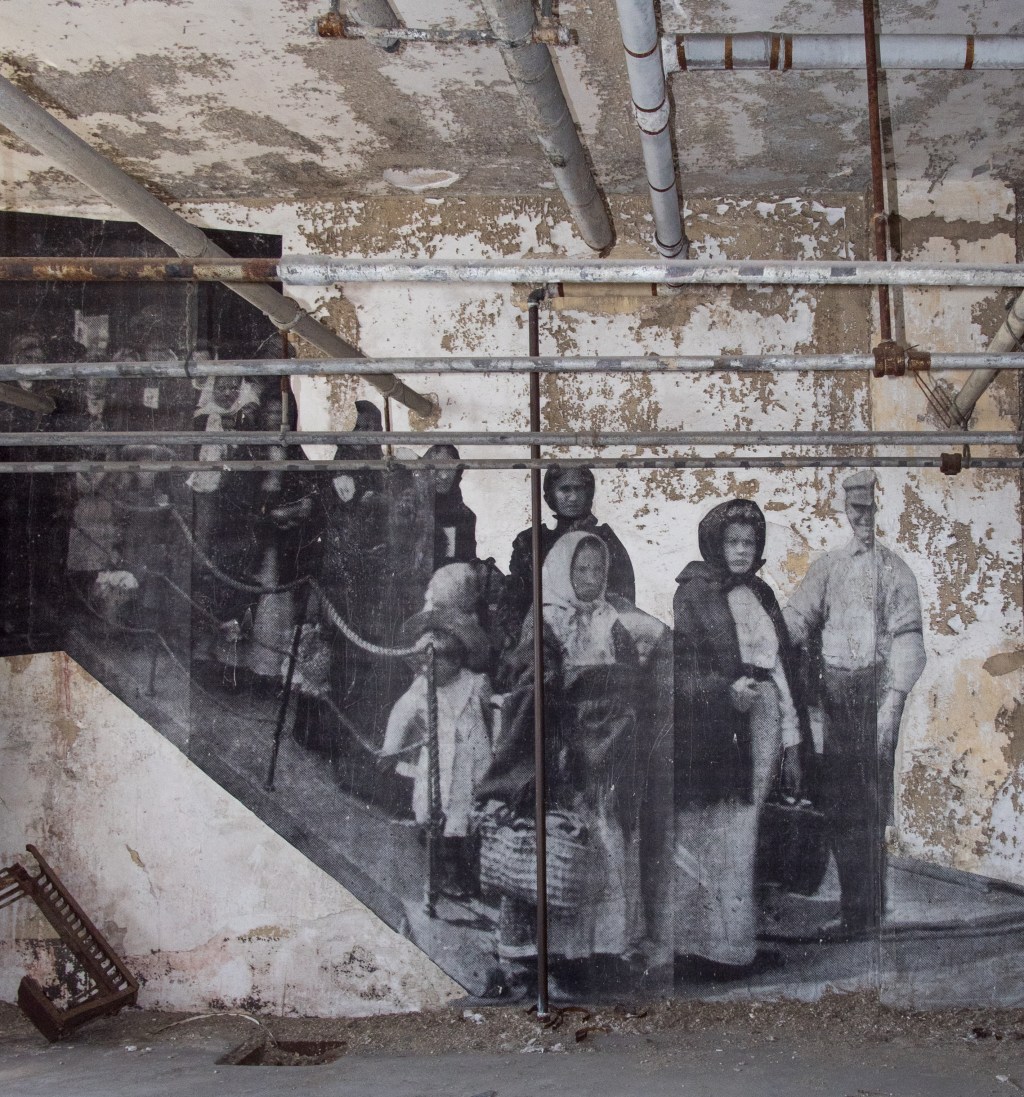
While researching my book New York Fairies: A History of the Little People of the Empire State, I came across four interesting nineteenth-century cases of Irish (and other) immigrants experiencing fairy-related delusions.
I don’t want to give an exhaustive account of the cases here because I describe them in the book. But I will give a general idea of the type of mental illness involved in each case:
- An Irishwoman in 1860s Manhattan suffered from the delusion that her child was a fairy changeling; she inadvertently killed him and was admitted to the New York City Lunatic Asylum on Roosevelt Island. (Folklorists Simon Young and Chris Woodyard first drew attention to this case.)
- An Irishman in 1880s New York City suffered from the delusion that an Anglican nun (whom he’d been following) was in league with malicious fairies. He ended up shooting her and critically injuring her. The man also suffered from the delusion that fairies and witches caused infrastructure accidents on Long Island.
- A man in 1880s Brooklyn visited the police complaining of exhaustion after being bothered by fairies outside his bedroom window. Those who recorded the man’s claims interpreted them as evidence of “lunacy.”
- Another case—which occurred in a city outside New York—concerns an Irishman who became anxious and depressed after hearing the banshee’s cry. That man became temporarily aggressive, holed himself up in his apartment for an extended period of time, and developed the fixation that his sister must have died. Although the man’s belief didn’t necessarily rise to the level of a “delusion,” it was certainly accompanied by extreme anxiety. (Young and Woodyard also drew attention to this case.)
What we seem to be dealing with here is a rash of fairy-related delusions from the nineteenth century, each experienced by an Irish immigrant in an urban context. It’s possible that these cases (i.e., those which made the national newspapers) represent a wider phenomenon of nineteenth-century New York life.
As a researcher of U.S. fairy folklore, I have the following questions and thoughts:
- To what extent can we draw conclusions about the prevalence of fairy folklore in New York City based on instances of mental illness? Are delusions about fairies evidence of a wider culture of fairy beliefs?
- My hunch is that the four cases mentioned above do provide clear evidence of the existence of fairy folklore in New York City (and beyond) because I believe that the basic thought-content of a delusion must, to some extent, reflect the wider culture. Every delusion has a cultural component, and this can be used as evidence of wider beliefs. Examining the case of the woman who killed her child, we find that she “learned” about the presence of fairies from a member of her community; in other words, her delusion drew on communal beliefs.
- To conclude that a belief is “delusional,” we normally have to see it as abnormal—that is, uncharacteristic of a person’s culture. According to this definition, belief in fairies among nineteenth-century Irish immigrants wasn’t delusional because it was characteristic of the culture. In the cases mentioned above, it wasn’t the fairy content of the beliefs that defined those beliefs as delusional but rather their extreme nature. Believing that fairies are real isn’t delusional, but believing that they control Long Island is. Similarly, believing that fairies can steal children isn’t necessarily delusional, but believing that a fairy has replaced one’s child and that the child must be placed on a heated spade is.
- In the case of Irish immigration to New York City, the fact that fairy belief had been transplanted to a context in which the wider culture denied the existence of fairies must have complicated the expression and interpretation of belief. This can be seen in case 4 above (the man who was plunged into depression when he heard the banshee’s call). Based on the reports of that story, the man’s neighbors didn’t know what to make of his extreme reaction to the banshee. With no relatives in the United States and (apparently) lacking Irish friends who’d understand his belief in banshees, he isolated himself in his room. At the same time, it’s unclear if the man’s neighbors considered him “deluded” or whether they saw him as behaving in a way they expected an Irishman to behave.
- What is the relationship between the cultural stressors of nineteenth-century New York City and the outbreak of mental illness? Everything I’ve read about Irish immigrants in the city suggests that they didn’t live easy lives. Not only had famine and widespread evictions caused them to flee their country of birth, they now lived in an unfamiliar environment marked by poor housing, discrimination, culture shock, disease, and filthy or dangerous work conditions. In the case of the 1860s, we can add the impact of the Civil War, which tore husbands from their families and left wives to bring up their children alone. These circumstances might well exacerbate the prevalence of mental illness. Did the traumatic events experienced by nineteenth-century Irish immigrants cause certain vulnerable individuals to express a cultural belief in fairies in ways that stretched the bounds of normality?
If anybody has knowledge of the relationship between culture (particularly folklore) and mental illness—or if you have thoughts on this post more generally—do comment below.
Preorder my book on New York Fairies here.

 Fairies of New England: The Little People of the Hills and Forests
Leave a comment