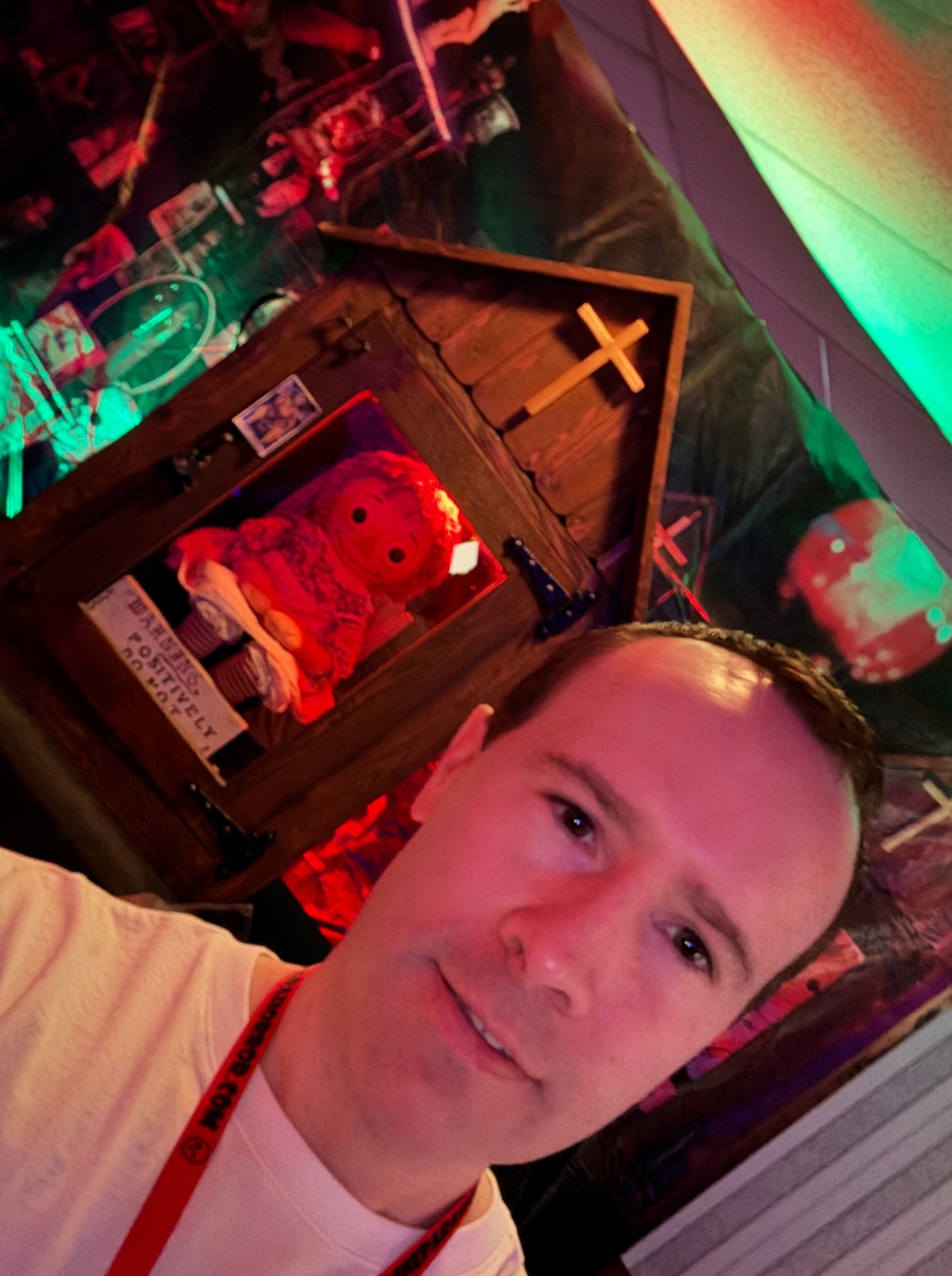
Last weekend I had the great pleasure of taking part in a panel at the Maine Paranormal and Horror Convention, where I got to see the original Annabelle doll.
(For those who aren’t familiar with Annabelle, she’s the demon-infested doll made famous by The Conjuring film series: she’s currently traveling the United States as part of the Warrens’ Occult Museum).
While sitting on the panel, the panel host (my good friend Sam Baltrusis) asked me what I thought of the atmosphere inside the museum. While it hadn’t occurred to me at the time, I realized upon reflection that the museum is set up a bit like a religious shrine. The experience of entering and leaving the space is ritualistic, with soft lighting creating a feeling of reverence for the objects displayed.
The doll itself is housed in a wooden box that resembles a shrine, with a golden cross affixed to the top and silver gloves placed strategically in front. The Devil tarot card nailed to the box is perhaps the most obvious signifier of the doll’s evil nature. The gloves, however, are a more powerful one: they inform the spectator that the doll is too evil even to be touched. Clearly, great thought has been put into presenting Annabelle as an object of power.
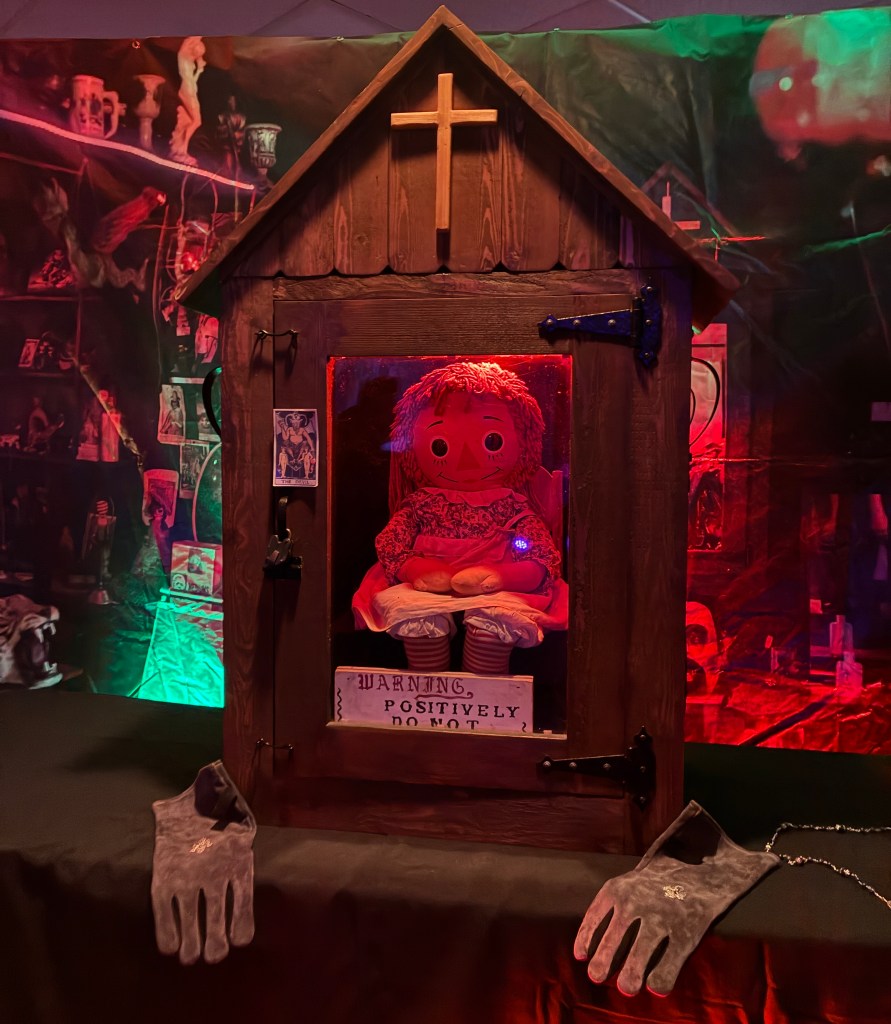
Adding to the impression of Annabelle as a dangerous object is the presence of a priest in the museum space. When I visited, he was blessing people with holy oil and praying over them, which implies that the person visiting Annabelle requires special protection from the evil attached to her. Being in the presence of great evil requires a form of holy preparation.
All this would be very similar to the presentation of holy relics if the Annabelle “set up” didn’t invert what one expects from such a visit. Nobody requires protection from a relic, for the experience is meant to be salutary, not only increasing one’s faith but bestowing grace or healing as well. Annabelle, on the other hand, is presented as an object that can potentially harm people if the proper preparations are neglected.
When I posted a collection of photos of my time at the convention on TikTok (the above image of Annabelle included among them), viewers started to post “sorry” over and over again in the comments. At first I was confused: why would people be apologizing to my video? Eventually, one comment arrived that clarified everything:
I’m sorry Annabelle for looking into your eyes without permission. I didn’t mean to do it and I reject any negative energy acquired. Amen.
Clearly, one folk belief that’s developed in association with Annabelle is that if you look into her eyes without asking permission, she might do something very horrible to you. (I would posit as the inspiration for this folk belief a certain interview with Lorraine Warren in which she calls the doll the “worst thing in [the museum]” and says, “I’m not going to stare at it. . . because that [doll] has done great harm to people.”)
The first thing I did after realizing that people were responding to the video in this way was to delete it. The comments reminded me of those awful chain emails I sometimes received in the early days of email, telling me to forward the email or something horrible would happen. Nobody wants to be part of that. The young age of many TikTok users also occurred to me, and I didn’t like the thought of frightening people who might be superstitious or unsure about Annabelle’s power. (Of course, it’s also quite likely that many of these comments simply reflected a desire to join in with The Conjuring universe in a fun kind of way and that nothing deeper lay behind them.)
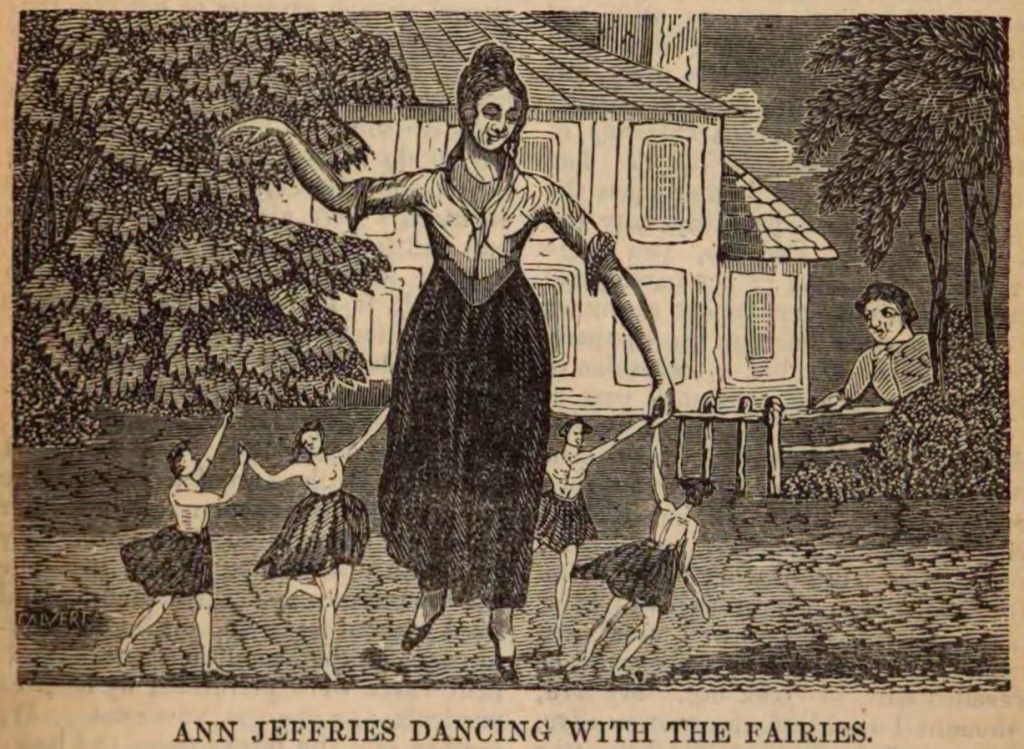
At the same time, it occurred to me that apologizing to a demonic doll is basically similar to any ancient practice of propitiating evil. It’s not that different from propitiating fairies by calling them “the beautiful people” or refusing to talk about them for fear of causing offense. All this is quite pagan, for the gods in pagan Rome were vengeful; associated with fate, they had to be propitiated in precise ways to prevent terrible things from happening. (An example of a historical figure who failed to take proper precautions when interacting with the divine is Tullus Hostilius, the third king of Rome. After performing religious rites improperly, he was struck down by a bolt of lightning from Jupiter.)
The propitiatory practice of TikTok users, combined with the ritualistic atmosphere inside the museum, suggested to me that interest in Annabelle amounts to a kind of minor folk cult in which spectators are allowed to experience the proximity of absolute (or demonic) evil.
This got me wondering what the purpose of such a cult would be. Every time someone propitiates a source of evil (by apologizing to it, for example), isn’t one empowering it? Similarly, isn’t the museum doing everything in its power to heighten the sense of Annabelle’s evil? What kind of cult is productive of an experience of evil?
With these thoughts in my mind, I couldn’t help taking a rather judgmental approach to the “cult of Annabelle.” I looked with some scorn at a cult or ritual that appeared, to me, to enable the reverence of something that shouldn’t be reverenced (by reverence, I mean a deliberate approach to an object and a kind of humble recognition of its power).
It was my partner—a therapist—who made me think more deeply about this, pointing out that there may be something meaningful in the experience of emerging unscathed from the presence of the demonic. Clearly, the Annabelle ritual is about more than mere reverence of evil’s power but also about mastery of it. In fact, the recognition of the power of evil is in service to one’s mastery of it, because one can’t really master something one hasn’t undergone (in this case, via a multitude of protections). After all, no harm occurs in the Annabelle “ritual,” and the only evil present is a static, boxed-in version presented through various signifiers.
I came to the conclusion that the Annabelle “ritual” may help some people to make sense of the evils in their own lives. For a start, one has to recognize that every human being lives in a world beset by various evils. I don’t just mean moral evil (although the scourge of mass shootings is more than enough evidence of that), but also “natural evil.” Natural evil refers to such things as earthquakes and floods. Although these aren’t anybody’s fault, they’re nevertheless evil to the people who undergo them because they’re harmful. When experiencing them, one is also experiencing what appears to be an abandonment by God. After all, God could intervene, if he wished, to prevent every earthquake or flood. This is the mystery of evil that all of us have to grapple with.
When good people undergo the experience of evil simply by existing in the world, a ritual that allows people to experience the presence of immobilized evil (that is, Annabelle in the box) is surely a powerful thing. The doll itself, in this context, becomes a symbol in which our trials are distilled. Our existence-surrounded-by-evil is ritualized in the form of an encounter with an absolute evil that cannot harm us. In this way, a visit to Annabelle functions in a similar way to watching horror movies, which allow people to experience fear without harm. The Warrens’ traveling museum is therefore a natural extension of The Conjuring film series.
One unusual thing about the Annabelle experience is that, despite invoking strong Catholic themes, rituals that enable proximity to evil have never really been a part of the Catholic tradition (unless, that is, one understands behaviors associated with demonic possession and exorcism as enabling such a thing). Although the Catholic tradition has certainly represented the Devil, it offers the crucifixion of Jesus and the sufferings of the saints as the most powerful symbols of the experience of evil—that is, the undergoing of evil and triumph over it.
Without delving into questions about the story’s authenticity or the Warrens’ reputation, I’m a bit more sympathetic now to people’s enthusiasm for the Annabelle story. Although I never thought I’d choose to place myself in the presence of the allegedly demonic, I’ve come to think that there may be some worth in people’s visits to the Warrens’ Occult Museum.
You can read more about the propitiation of supernatural beings in my book, New York Fairies, now now.



 Fairies of New England: The Little People of the Hills and Forests
Leave a comment